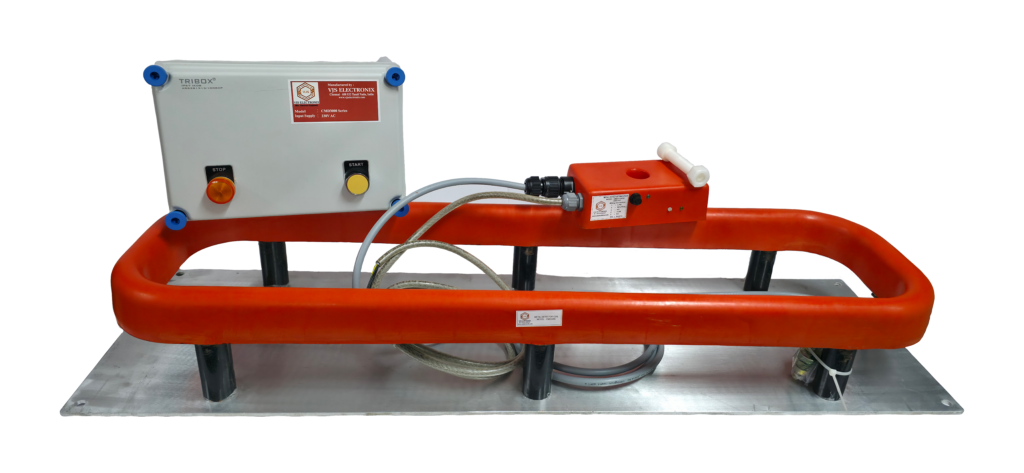
Metal contamination is a major issue in various industrial plants, particularly in food processing, pharmaceuticals, packaging, plastics, etc. A small piece of metal can impact product quality, cause damage to machinery or create safety concerns with end users. Contaminant control is crucial in order to ensure uniformity at the next stage of product manufacturing and to safeguard a company’s reputation before these contaminants reach that point. This is where metal detector conveyor manufacturers come into the picture and offer an integrated detection system for industrial production lines. Metal Detector Conveyor Manufacturer in India systems are a unique integration of metal detection technology and material-moving systems, where the conveyor moves a product through a metal detection area. These systems assist manufacturers in the detection of unwanted metal particles without completely relying on manual inspection.
“Quality production begins with effective inspection and ends with customer confidence.”
One of the most critical elements that affect customer trust and business performance is product quality. Metal particles can be introduced in manufacturing operations from worn equipment parts, damaged tools, raw materials, or equipment maintenance operations. This can leave these contaminants unrevealed until the product is packaged or, in some instances, until the customer receives it. One solution to this problem is by using metal detector conveyor systems, which are used to check products moving through the production line. The system may detect various kinds of metallic contaminants and sound an alarm or initiate an automatic rejection system, depending on the design and configuration of the detector.
This ongoing testing process enables manufacturers to spot potential contamination before going any further in the production process. It is especially useful for companies that process many packaged items, packaged food, powders, granules and other materials, where consistency of quality is important. An appropriate metal detection system also helps in a more structured approach to quality management. Relying only on random inspections, manufacturers can identify specific points of inspection in the manufacturing process. This improves consistency, minimises the risk of out-of-spec products going undetected, and aids the internal quality assurance procedures.
The efficiency of the separation obtained is determined by the properties of the product, conveyor speed, sensitivity of the detector and the design of the rejection mechanism. Choosing equipment suitable to the production environment ensures a practical balance between inspection accuracy and production output for businesses. Businesses can ensure that their production process remains fast and efficient by using metal detector conveyor systems that include vital inspection steps. Their efficiency benefits include:
Products are not the only ones contaminated by metals. Unexpected metal in manufacturing equipment can injure moving parts, cutting equipment, grinders, mixers and other manufacturing assets. This can result in unforeseen downtime, costly repairs, and missed production deadlines. A metal detector conveyor system could be utilised to detect metal objects before they get to the sensitive downstream equipment. The system is placed at an appropriate point in the production line for an extra layer of protection for machinery and processing operations.
Main benefits in operation include:
Industrial manufacturers need to have processes in place to protect workers, products and customers. An issue with metal contamination can present a number of problems such as physical hazards in the finished product, damage to production equipment and disruption to the production process because of unexpected equipment failures. A metal detector conveyor system can be used to create a second point of inspection in a business’ quality control process. The system can identify appropriate metallic contaminants before products proceed to the next production stages, thereby minimising potential risks due to contamination. These systems are especially beneficial in areas where product integrity is highly monitored, such as the food industry. Food processing businesses, for instance, may incorporate conveyor metal detection into their hazard control and food safety programmes. Depending on the nature of the process and requirements, pharmaceutical and packaging manufacturers can also leverage detection equipment to form a part of their product inspection regime.
Employers need to be mindful that having a detector is not enough to ensure compliance. The complete quality management system and established industry standards, documented procedures, equipment validation, and frequent performance checks are essential for compliance. It is also crucial to train employees on the safe use of the equipment. Operators should be familiar with alarm responses, product rejection procedures, testing schedules and documentation requirements. Metal detection can be used in conjunction with appropriate training and quality assurance systems to help create a safer and more controlled industrial production process.
Various industries need various detector configurations. The size, moisture level, temperature and packaging materials of the product, as well as belt width and speed, may affect detection performance. The metal detector conveyor systems are used in various industries due to the flexibility of their configuration to the different products and production requirements. Important applications include:
Automation has now become a key element of modern-day industrial production. Today, integrated equipment is a key way that companies maintain consistent production, eliminate repetitive manual labour, and gain visibility of the process. These goals are achieved with metal detector conveyor systems, which integrate inspection technology and automated material handling. The detector is capable of alarming when needed and can trigger rejection systems and feed operational data back to production operators when appropriate control systems are connected. This enables businesses to establish a more consistent response whenever potential metal contamination is detected. Automation can also minimise the risk of variations in inspection caused by the operator. But human intervention is still required to make sure that the system functions properly and to ensure that the rejected products are properly handled.
The primary automation benefits are:
It’s not just about buying metal detector inspection equipment when you are investing in a metal detector conveyor system. Installation, integration, employee training, maintenance and continuous testing are also factors that businesses need to take into account. These considerations can help manufacturers determine the future value of investing in a new machine. With effective metal detection, these costs can be significantly minimised by reducing the amount of contaminated product, customer complaints, rejected batches and unnecessary damage to the machinery. If contamination is identified early, depending on the quantity of the contamination, further inspection or reprocessing of an entire production batch may be avoided.
The benefits can be economic, such as avoiding contamination loss, less unexpected downtime, streamlined inspections and enhanced product quality management. The total cost of ownership should be compared with measurable operational benefits to assess ROI for manufacturers. Some of the indicators that are useful are the number of contamination events, downtime in production, amount of rejected product, maintenance costs and inspection labour. Consumables, spare parts, calibration/verification service, and technical service should also be considered for the cost of the business.
“Reliable metal detection is a small investment that can protect product quality and business reputation.”
Metal detection is an important part of quality control in modern industrial production. From improving product integrity and reducing contamination risks to protecting machinery and supporting automated inspection, metal detector conveyor systems offer several practical advantages for manufacturing businesses. Choosing the right equipment requires careful consideration of product characteristics, conveyor speed, detection sensitivity, rejection mechanisms, maintenance requirements and industry-specific standards. Working with experienced Metal Detector Conveyor Manufacturer in India can help businesses identify suitable systems for their production needs and integrate them effectively into existing operations. With proper installation, regular performance verification, and trained operators, these systems can support reliable inspection processes, improve operational efficiency, and contribute to long-term manufacturing quality.
Looking for the best Metal Detector in India? Well, we are the top Metal Detector Manufacturers in India. Best Manufacturers, Suppliers of Industrial Metal Detector, Stone Crusher Metal Detector, Crusher Conveyor Metal Detector, Stone Crusher Spare Part, Metal Detector Amplifier, NTG 251 Amplifier, Metal Detector Coil 650mm in India.
© Copyright 2026 VJS Electronix All Rights Reserved. and Developed By