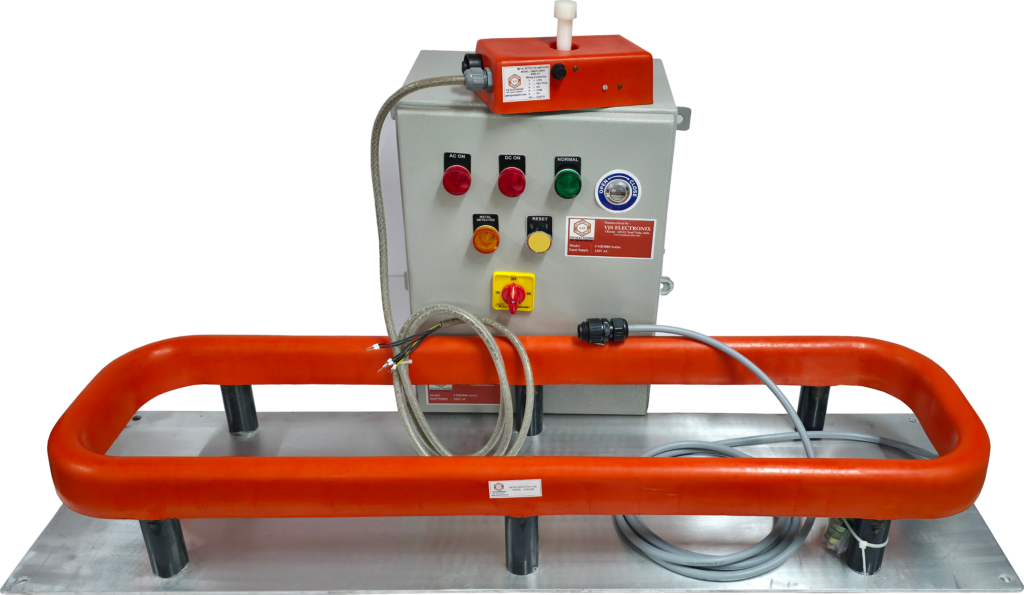
“Precision in metal detection is an investment in product quality and operational safety.”
Industrial metal detection plays an important role in maintaining product quality, protecting machinery and ensuring smooth production operations. Manufacturing industries handle different raw materials, processed goods, and finished products, where unwanted metal particles can create serious problems. Even a small metal fragment may damage expensive equipment, contaminate products, or interrupt production. Choosing the right Industrial Metal Detector Manufacturers in India is therefore an important decision for businesses that depend on reliable detection systems. However, selecting a suitable manufacturer involves more than comparing prices or product specifications. Businesses must evaluate detection accuracy, application requirements, equipment durability, customisation options, and after-sales support. A dependable manufacturing partner can help identify the right metal detection system for specific industrial needs while supporting long-term operational efficiency.
Before approaching a manufacturer, identify where and how the metal detector will be used in your production facility. Different industries have different detection requirements, depending on the materials being processed, the production environment and the type of metal contamination that needs to be identified. Understand these types of requirements helps you to find the suitable industrial metal detector manufacturers. Instead of selecting equipment based only on general specifications, this can help you focus on systems designed for your actual operating conditions. Before selecting the detector, consider the type of material being inspected, its size, temperature, moisture content and movement speed.
A manufacturer that is technically proficient should be able to describe the merits and disadvantages of its equipment and should not just be able to sell a standard product. As you compare industrial metal detector manufacturers, consider these important factors:
Every production facility has its own layout, operating speed and material handling requirements. A metal detector that performs well in one application may not be suitable for another application. That’s why choosing a metal detector that suits all your requirements, customisation and system compatibility should be an important consideration when choosing an industrial metal detector manufacturer. Some applications require conveyor-based metal detection systems, while others may need equipment designed for pipelines, free-falling materials, or specialised inspection points. The correct configuration depends on the production process and the physical characteristics of the material being inspected.
A suitable manufacturer should assess your application before recommending a system. This evaluation helps determine the appropriate detector size, installation position, operating settings, and integration requirements.
When discussing customisation, consider the following features:
One of the most crucial things to consider when buying industrial metal detection equipment is detection accuracy. A system should continuously detect and pinpoint important metal contamination without causing needless production delays. But the actual performance is affected by several factors such as the design of the detector, type of metal, product characteristics, and environmental factors. When searching for manufacturers, inquire about the testing and verification of detection performance. Ask to see samples of representative products and metal samples of the materials wherever you can.
This can give you insight into how the equipment will operate in conditions similar to your facility. Reliability is also important if the detector is used for long periods of time. Repeated faults, unstable detection or false alarms can impact both productivity and operating expenses. With proper system design, installation and regular maintenance, more consistent production can be achieved. Look for features like detection adjustments, fault indicators, alarms, and performance monitoring from the manufacturer. If the application requires a strict inspection process, inquire about the verification processes and recordkeeping requirements.
Metal detection equipment in the industrial sector must be installed correctly, inspected regularly and properly maintained to ensure optimal operation. For any supplier, prior to finalising, ask about the after-sales support services during the equipment’s useful life. After-sales support can minimise downtime and issues that may arise from minor technicalities. In businesses with production delay impacts, it is very important that it is extremely important for enterprises.
Finances are a major consideration in equipment selection, but it is not always the case that the cheapest item in the short term is the best investment. The overall cost of ownership, such as installation, operation, maintenance, repairs and possible production losses, should be considered. A low-cost system can need to be serviced more often or may not be able to achieve the detection performance needed in your application. An optimally designed system, on the other hand, can allow for regular inspection and minimise unnecessary disturbances in the long term.
Before comparing quotations, review these cost-related factors:
The experience of a manufacturer can be very informative in determining what they can do for various industry needs. Applications that are similar to the one being installed may be more likely to have a company with an understanding of installation issues, production limitations, and performance requirements. Don’t just take someone’s word for it, though. Request product specifications, project references, customer feedback and examples of similar installations if possible. These details can be used to determine if the manufacturer has been able to provide equipment for some similar applications. Another factor to consider is the clarity of communications within the company during the enquiry process.
A professional manufacturer should ask pertinent technical questions, give realistic recommendations and discuss product characteristics without making unqualified promises of performance. Always check the business credibility, manufacturing or supply ability, warranty policy and servicing terms of the company before ordering. If the equipment is required to comply with industry or regulatory standards, verify these standards and ask for supporting documentation.
“The right detection system helps businesses protect their products, equipment, and reputation.”
Choosing the right industrial metal detection requirements requires a clear understanding of your production needs, technical requirements, budget and long-term operational goals. Businesses should evaluate detection accuracy, equipment quality, customisation options, maintenance requirements and technical support before making a final decision. Working with experienced Industrial Metal Detector Manufacturers in India can help you identify a suitable detection system for your application and establish realistic expectations for performance, installation, and ongoing maintenance. By comparing manufacturers carefully and assessing the total cost of ownership, you can make a more informed investment that supports product quality, machinery protection, and production efficiency.
Looking for the best Metal Detector in India? Well, we are the top Metal Detector Manufacturers in India. Best Manufacturers, Suppliers of Industrial Metal Detector, Stone Crusher Metal Detector, Crusher Conveyor Metal Detector, Stone Crusher Spare Part, Metal Detector Amplifier, NTG 251 Amplifier, Metal Detector Coil 650mm in India.
© Copyright 2026 VJS Electronix All Rights Reserved. and Developed By